

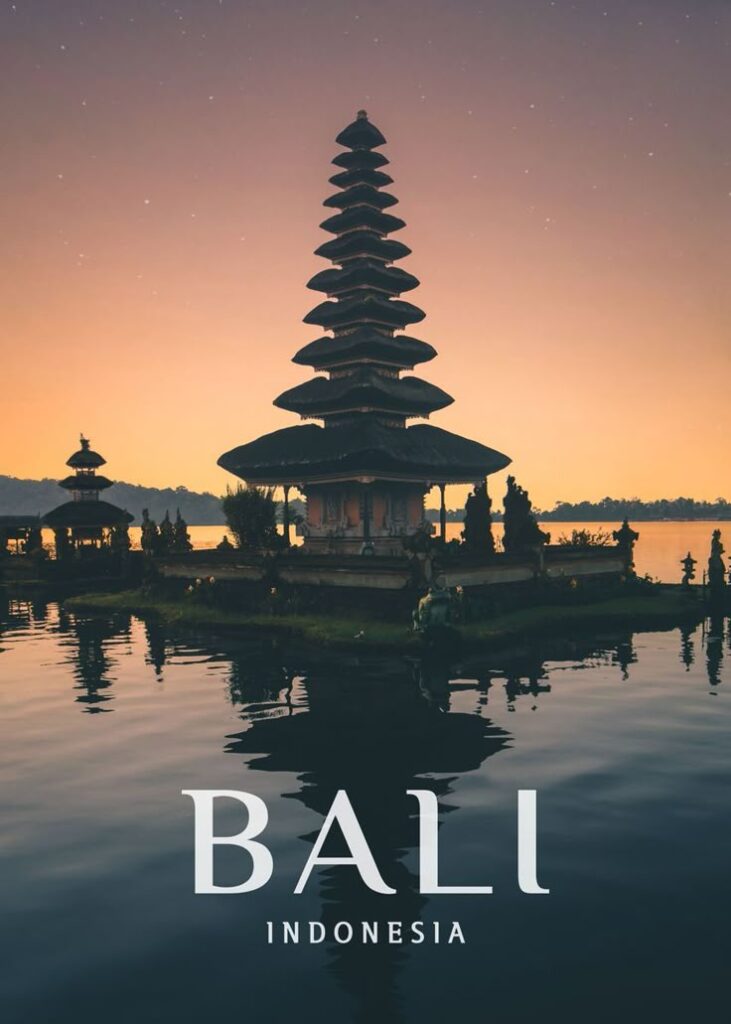
Bali Indonesia
Geography & Location
Bali is an Indonesian province situated approximately 2–3 km east of Java, separated by the Bali Strait. It spans around 5,600 km², measuring about 153 km west–east and 112 km north–south.
The island features mountainous terrain centrally, including Mount Agung (3,031 m) — Bali’s highest and an active volcano — and Mount Batur (1,717 m), another active volcano with a caldera lake.
Bali’s landscapes are diverse: volcanic peaks, terraced rice fields, lush forests, and beaches with both white and volcanic-black sand.
Population & Demographics
Bali has an estimated population of around 4.2 to 4.4 million, reflecting steady post-2010 growth.
The Balinese are predominantly Hindu, practicing a unique form known as Agama Hindu Dharma — over 90% of the island’s population follow Hinduism.
Culture & Tradition
Bali’s identity is deeply shaped by Hindu spirituality, visible in its 20,000+ temples (pura), including water temples, sea temples, and other ritual spaces aligned with Balinese cosmology and calendar cycles.
Its artistic heritage includes dance, sculpture, painting, and religious ceremonies, often tied to seasonal and life-cycle rituals.
Economy & Tourism
Tourism is the lifeblood of Bali’s economy, contributing approximately 70–80% of GDP, with sector-related income fueling rapid development.
Recent Comments